A Light shining in the Kampala slum
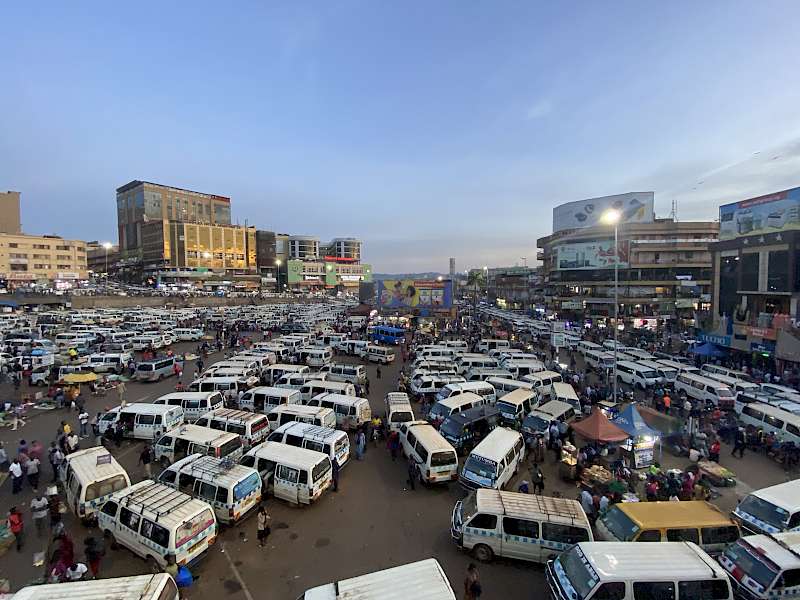
Kampala is the capital of Uganda and, with a population of 1.7 million (which becomes almost 7 if one considers the entire metropolitan area), it is its main city. It is located a few kilometres from the shores of Lake Victoria (which measures three times the size of Lombardy!), at an altitude of 1,200 metres above sea level (which is not here).
The city is the beating heart of a country (Uganda) of about 45 million people, characterised by a young population and a rapidly growing economy, but still plagued by great social inequalities.
Uganda is known for its rich biodiversity, fertile soil, abundant natural resources (including recently discovered - and plundered! - mineral and oil deposits) and for having been the scene of turbulent times in its recent political history. After decades of instability, marked by the Idi Amin regime and civil war, the country has found relative stability under Yoweri Museveni, who has ruled the country in an authoritarian manner since 1986 (!).
Despite sustained economic growth and considerable infrastructural development, Uganda is still grappling with problems such as corruption, youth unemployment, alcoholism and social inequalities that are clearly reflected in Kampala itself.
The city, in fact, presents itself as a mixture of modernity and tradition, where the old is mixed with the new, and where the country's challenges are reflected in the urban landscape, made up of upscale neighbourhoods next to realslums. And if in the upper part of the city the gardens are well-kept and the institutional buildings Instagrammable (were it not for the strict prohibition against photographing them), it is only by plunging into the lower part that one discovers the true soul of the city.
As soon as you arrive, what strikes you is theintensity of the chaos. The traffic seems to follow its own rules. Hundreds of mopeds (boda boda) zigzag in a frenetic dance dodging cars stopped in columns and climbing up pavements jammed with every living thing. Buses (matatu) overloaded and jostling, taking advantage of every light point, squeeze in everywhere just to gain a few centimetres and stop for good a moment further on. Traffic policemen in fluorescent bibs directing traffic in a random manner and Babylonian crossroads where the only Law in force is that ‘the biggest one goes first’.
A blanket of red dust, humidity and smog suffocates everything. Here, that sky of stars that lights up after the most classic (and beautiful) of African sunsets can only be imagined.
The incessant blare of horns (used in place of directional arrows), the muttering of catalytic converters and the guttural screams of preachers with megaphones and Bibles at every street corner, the only sounds in this urban savannah.
The population density is overwhelming; everywhere you turn, people are moving, working, selling, living, surviving. A vitality that engulfs you and is difficult to ignore, but equally difficult to comprehend for those of us - like us, mzungu - who come from such a different reality.
Our 5 senses, here at the equator, are put to the test and our batteries drain much faster than at the 46th parallel.
Kampala stands on 7 hills - like an African Rome - and each one tells a different story. From above, in the residential quarters of the rich, the villas protected by high walls and barbed wire are symbols of a life quite different from that which is lived at the foot of the hills, where theslums extend and where the ISP compound stands. Men among men, first among the last.
In the Namuwongo slum (the largest in the city, where 35,000 people are crammed in, and which is only a few hundred metres from the ISP compound where we are staying), life is hard and the signs of poverty are evident: rusty tin ‘houses’, muddy alleys, open latrines, disease at every corner and a sense of daily struggle for survival. But it is here, in the darkness of this reality, that the seeds of rebirth and the clear Light shining beyond the darkness can be glimpsed.
People's gazes reflect a silent strength and determination that leaves its mark. It is from here, in fact, that every day 7 wonderful women ascend Dante's circle to go to the ISP compound and write - with needle and thread - their story of rebirth, beauty and deep gratitude.
And just like 7 supreme poets, they go through their own hell on a daily basis to transform suffering into strength, difficulty into art, pain into hope.
It is in this journey of redemption that every day they become a living example and testimony of how even from the deepest darkness light can emerge, and that even from the darkest of hells angels can be born.
In the coming days, we will tell you another story of hope in action. Among the school desks and in the faces of the children (supported thanks to the Maratona dles Dolomites) and in the wonderful reality created by Juliette to support children with disabilities in the outskirts of Kampala.
Stay with us; even the greatest change - like a long journey - begins with a single step.
